Gisela Lange · 20 October 2026
Modeling Exercises Reveal Potential Northward Shifts in European Forest Boundaries
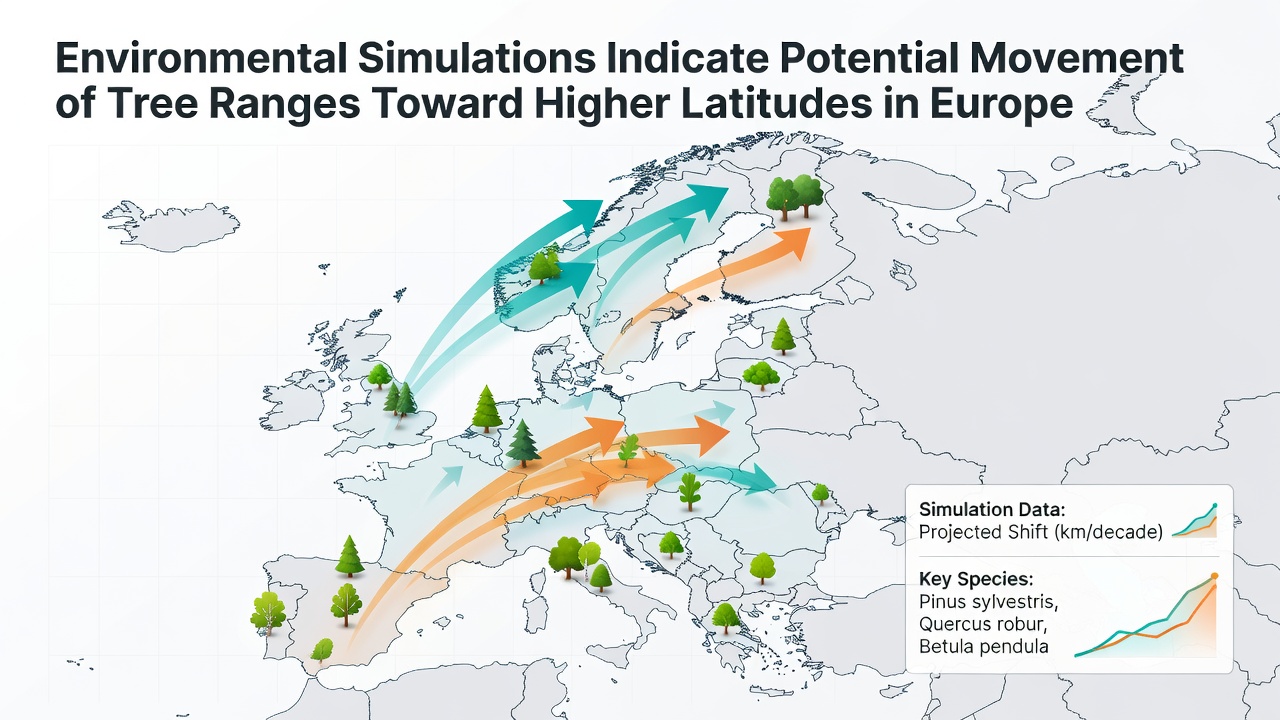
Environmental simulations have produced data that point toward possible movements of various tree species ranges toward higher latitudes throughout Europe, and researchers continue to refine these models with new climate inputs. These exercises draw on species distribution modeling techniques that incorporate temperature gradients, precipitation patterns, and soil variables to map where suitable habitats may develop over coming decades. Data from multiple runs indicate that certain broadleaf species could find conditions more favorable in regions currently dominated by conifers, while southern populations face constraints from warmer and drier summers.
Key Findings from Recent Simulations
Projections generated by teams across several institutions show consistent patterns of poleward advancement for species such as European beech and silver birch, with range edges potentially advancing by tens of kilometers per decade under moderate emissions scenarios. Observers note that maple species already present in central European woodlands appear in many outputs as candidates for expansion into Baltic and Scandinavian zones where frost periods shorten. Figures reveal that the velocity of climate change often exceeds natural migration rates for trees, which rely on seed dispersal by wind, animals, and occasional human assistance, yet simulations incorporate assisted migration parameters in some cases to test management options.
One study coordinated through European research networks examined over 50 tree taxa and found that roughly two-thirds displayed net gains in suitable area at latitudes above 55 degrees north by the middle of the century. Those who've studied these outputs know that northern refugia for cold-adapted species may contract even as new opportunities open for warmth-tolerant competitors, creating novel forest compositions. And while dispersal limitations receive explicit treatment in the models, connectivity corridors along river valleys and protected areas emerge as critical factors that could accelerate or hinder actual range filling.
Role of October 2026 Model Updates
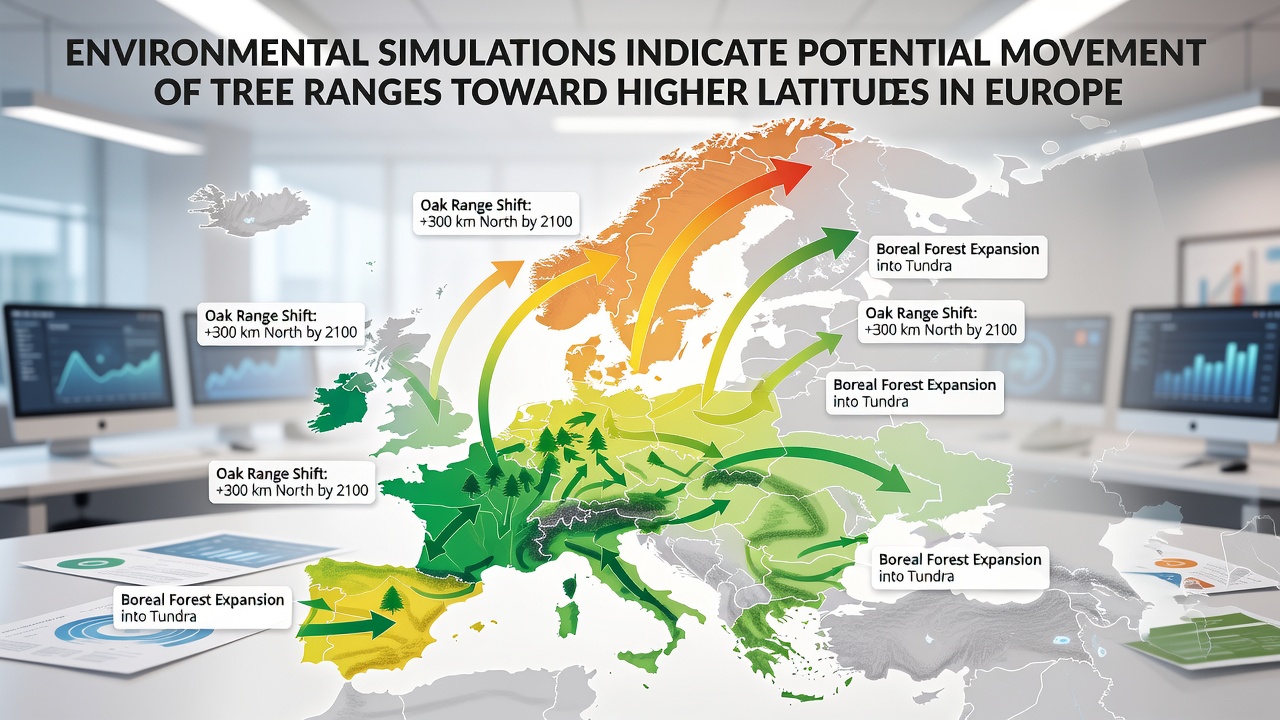
In October 2026, several modeling groups released revised runs that folded in the latest downscaled climate data from regional earth system models, and these updates sharpened estimates for eastern and northern Europe in particular. The revised projections indicate faster potential movement for pioneer species that tolerate a wide range of soil conditions, whereas late-successional trees show more conservative shifts because they require specific mycorrhizal associations and canopy gaps to establish. Researchers discovered that incorporating land-use change layers alongside climate variables reduces projected northward gains in some agricultural landscapes, underscoring the interplay between biophysical and anthropogenic drivers.
Supporting Data and External Sources
Evidence from long-term monitoring plots across Scandinavia and the Baltic states already documents young saplings of more southerly species establishing beyond historical limits, although these observations remain patchy. According to the European Environment Agency, habitat suitability maps align closely with the simulation outputs for several flagship taxa. What's interesting is how elevation gradients interact with latitude, because upslope movements in mountain ranges can serve as stepping stones that effectively increase the pace of overall range displacement toward the poles.
Simulations also account for extreme events such as late frosts and summer heatwaves that may filter which species successfully colonize new areas, and these stochastic elements introduce uncertainty bands around central tendency estimates. People who've examined ensemble outputs understand that agreement across models strengthens for northern Europe while southern Europe shows greater divergence depending on the chosen emissions pathway. A second authoritative source, the Natural Resources Canada forestry research portal, provides comparative data from analogous boreal systems that help calibrate European projections because similar species and climate velocities appear on both continents.
Implications for Forest Management
Forest managers in several countries have begun testing provenance trials that move seed stock from southern populations northward in anticipation of the modeled habitat shifts, and early results indicate improved growth performance under current conditions. These trials operate within regulatory frameworks that balance assisted migration against risks of introducing maladapted genotypes or invasive tendencies. Data indicate that maintaining genetic diversity within populations remains a priority because future climates may favor different trait combinations than those selected historically.
Connectivity planning receives attention in the simulations as well, since fragmented landscapes can trap species in unsuitable areas even when climate envelopes move. Observers note that protected area networks and green infrastructure corridors feature prominently in scenarios where range shifts reach their upper projected bounds. Yet the models also flag that some current conservation priorities may lose relevance if target species move out of designated zones, prompting calls for dynamic conservation planning that updates boundaries as conditions change.
Conclusion
Environmental simulations continue to supply quantitative guidance on potential tree range movements toward higher latitudes in Europe, and the October 2026 updates have refined the spatial and temporal resolution of those projections. The combined evidence from modeling ensembles, field observations, and comparative studies points to measurable shifts for multiple taxa, with implications that extend across ecological, economic, and policy domains. Ongoing refinement of input data and dispersal assumptions will determine how closely actual outcomes track these forecasts in the years ahead.