Wendy Washington · 6 October 2026
Archival Discoveries in Lublin Uncover Maple Timber Pathways from Polish Woodlands to Baltic Shipyards
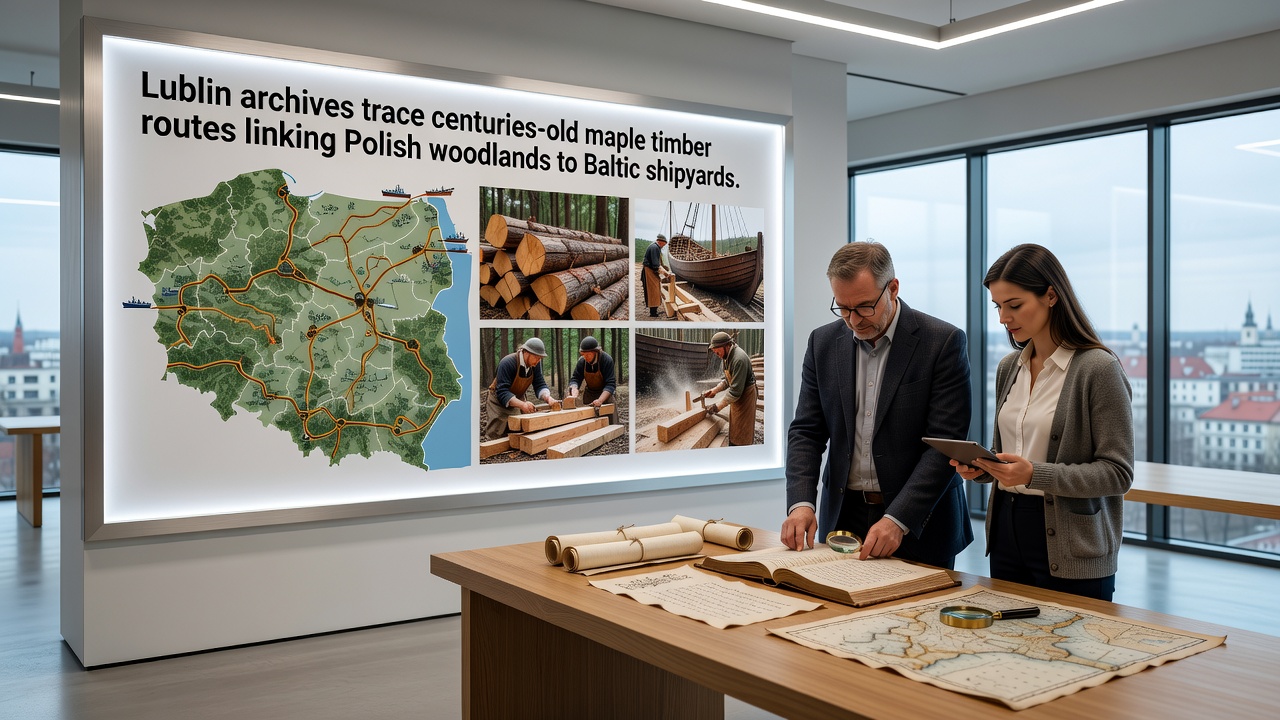
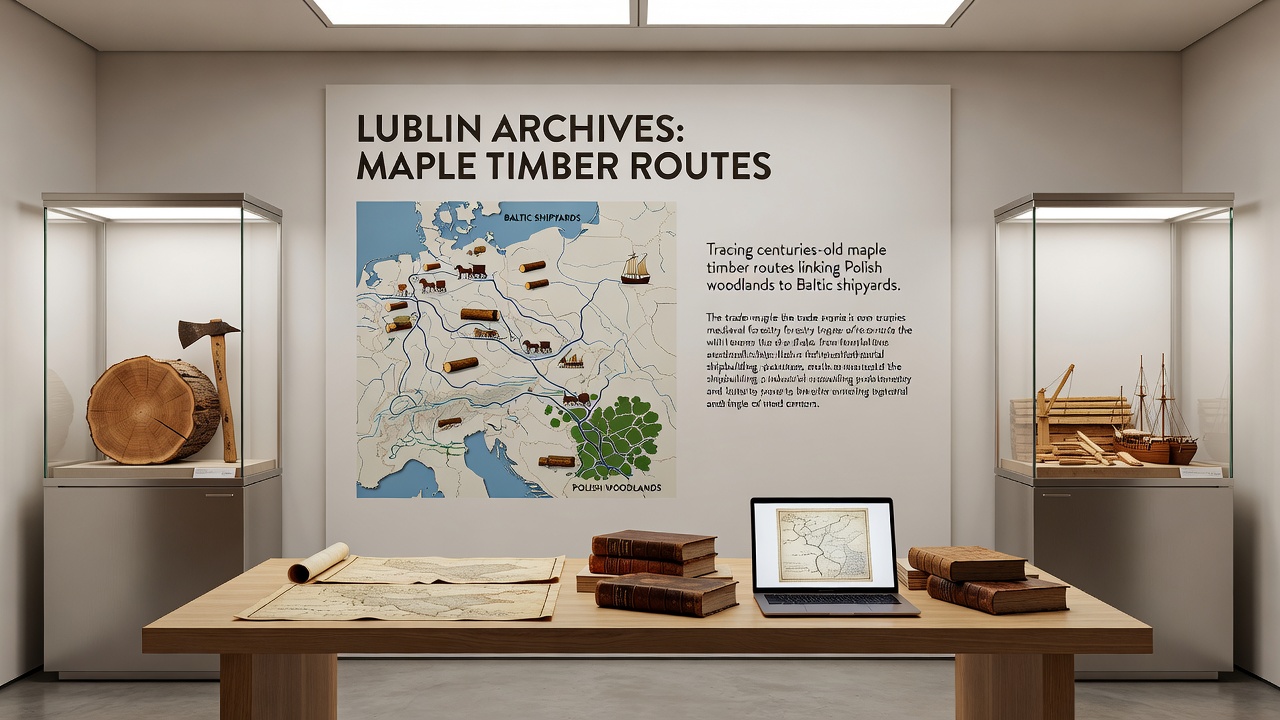
Researchers at the Lublin State Archives have pieced together extensive records that trace maple timber movement from inland Polish woodlands to Baltic shipyards across multiple centuries, and these documents detail supply chains that operated from the 1600s through the 1800s. The archives contain ledgers, contracts, and transport manifests that list specific volumes of maple logs harvested in regions such as the Lublin Upland and sent northward along river systems toward Gdańsk and other coastal centers where shipbuilders incorporated the wood into vessel construction.
Documented Harvest and Transport Networks
Archivists note that maple stands in eastern Poland supplied timber alongside more common species like oak, while records indicate that maple was valued for its density and resistance to splitting in particular ship components including keels, frames, and deck supports. Transport routes followed the Vistula River and its tributaries, with logs floated in seasonal rafts that reached Baltic ports after journeys lasting several weeks, and customs posts along the way recorded tolls paid on maple cargoes that reached volumes of several thousand cubic meters annually during peak periods in the 1700s.
One study of 18th-century manifests revealed that maple shipments from Lublin province often traveled in mixed loads with pine and beech, which allowed merchants to balance cargo stability during river transit, whereas separate manifests tracked maple destined for specialized Baltic yards that constructed merchant vessels for northern European fleets. Data from the archives show that harvest cycles aligned with winter months when frozen ground facilitated logging, and spring thaws enabled downstream movement before summer shipbuilding seasons began in earnest.
Role of Maple in Historical Ship Construction
Baltic shipyards relied on Polish maple for elements requiring fine grain and workability, and evidence from shipyard inventories lists maple planks used in interior fittings as well as structural reinforcements that withstood the stresses of open-sea voyages. Researchers have cross-referenced these inventories with surviving vessel plans to confirm that maple contributed to hull sections where flexibility combined with strength proved essential, and similar patterns appear in records from Swedish and Danish yards that imported the same Polish timber.
Additional documents describe partnerships between woodland owners in Poland and shipyard agents in Baltic cities, with payment often rendered in goods rather than currency, and these arrangements sustained steady maple flows even during periods of regional conflict. Figures preserved in the archives indicate that a single large raft convoy could carry enough maple to outfit multiple medium-sized vessels, which reduced the need for overland cart transport and lowered overall costs for shipbuilders.
Connections to Broader European Timber Trade
According to data compiled by the European Environment Agency, historical forest management in Poland supported sustained timber exports that fed Baltic industries for generations, while parallel records from Canadian forestry archives illustrate comparable river-based transport systems used in North American maple harvests during the same era. Observers note that the Polish routes documented in Lublin share structural similarities with those systems, including seasonal timing and reliance on natural waterways rather than roads.
Further analysis of 19th-century correspondence shows that depletion concerns prompted some Polish landowners to experiment with replanting maple alongside other hardwoods, and these early silviculture efforts appear in marginal notes within the same archival volumes that tracked exports. Shipyard demand remained consistent until steam-powered vessels reduced reliance on wooden construction in the later 1800s, at which point maple shipments declined sharply according to final ledger entries.
Recent Examination of the Collections
In October 2026 a team of historians completed digitization of several previously unindexed crates from the Lublin collection, and the newly accessible files include detailed route maps that pinpoint collection points in specific woodland parcels. These maps, combined with river gauge records, allow reconstruction of travel times and seasonal constraints that affected maple delivery schedules to Baltic destinations. Researchers continue to cross-reference the maps with port arrival logs from Gdańsk to verify delivery volumes and identify any discrepancies that might indicate unreported losses during transit.
Conclusion
The Lublin archives therefore provide a continuous record of maple timber movement that links Polish inland forests to Baltic shipbuilding centers over hundreds of years, and the documented routes, volumes, and end uses offer concrete evidence of this historical supply chain. Ongoing examination of the collections promises additional details on harvest practices, merchant networks, and the eventual decline of wooden ship construction that ended this particular trade.